
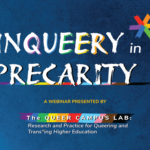
Inqueery in Precarity
November 3, 2026
1817 Project: Land, Culture, Memory, and Repair Teach-In
November 10, 2026Submit a pitch: “Reimagining Campus Activism”
What if we have mistaken the limits of our imagination for the limits of campus activism?
Campus activism has long shaped possibilities within higher education, and therefore histories of inclusion and exclusion. Yet the conditions we confront, the legacies we inherit, and the stories we share about the depth and breadth of activism on college campuses today are often incomplete. Most often, campus activism is in response to events or specific points of rupture that compel us to action. But for many of us, those points of rupture are compounded, interconnected with historical and contemporary inequities that are both multifaceted and unresolved. This can make organizing campus activism feels as if it is a process of beginning again and again, of revolving instead of evolving. What if the next evolution of campus activism begins with us rethinking what we think we know, listening to voices we have not heard, and centering those who have been displaced to the margins? We invite you, therefore, to reconsider, reimagine, and perhaps reclaim whose knowledge informs campus activism, whose actions are celebrated and made visible, and what forms of transformation campus activism makes possible.
Timeline & Guidelines
Scholars are invited to submit a pitch by November 20. We anticipate publishing in Spring 2027. Please consider the following:
- Pitches are about the length of an abstract (under 200 words)
- Pitches will be reviewed by considering their relevance, public accessibility, basis in trusted evidence, and clear writing organization and style.
- Authors must have previously produced scholarship or creative work related to the topic to ground the proposed essay.
- Invited contributors must review the writing guidelines to submit a first draft (1,200-1,800 words) within four weeks of being accepted and will be assigned a reviewer. The editorial team centers a social justice approach to the review and publication process.
Keep in mind that the audience for Spark Magazine is not specific to any discipline or education level. Envision the reader as someone with a broad understanding of research and scholarship, but without specific knowledge of your field.
If you have any questions about the pitch submission process, please contact managing editor Emma Soberano at [email protected].