Fall Happenings
August 24, 2026
Apply for the Inclusive History Project AY26-27 Teaching Fund
September 9, 2026
Scholar Spotlight: A Conversation with Dr. Keenan Colquitt
The Bowman Scholars Network supports more than 1,300 scholars across 515 institutions worldwide, creating opportunities for connection, collaboration, and professional growth.
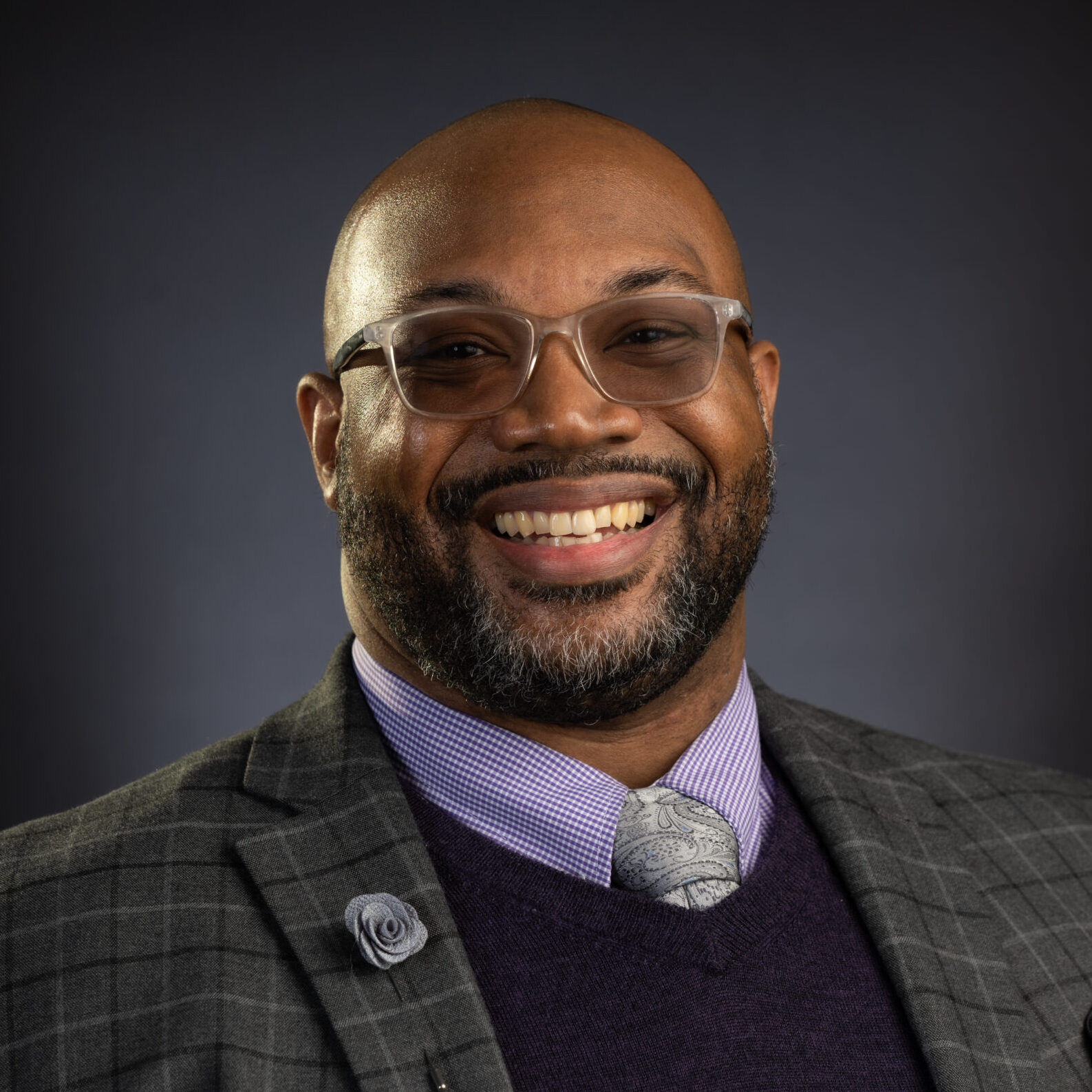
We sat down with Dr. Keenan Colquitt, program manager for scholar engagement, to discuss the Network's impact, his new book, and what's ahead for the coming academic year.
This September, the Bowman Center will host a funding conference for scholars. What can attendees expect, and why is this event especially timely?
Keenan: Amplifying Access: Funding Solutions for Scholarship that Matters will take place September 21–22, 2026, and is designed to be practical, collaborative, and strategy-focused.
Participants will choose from three experience tracks—Grant Newcomers, Early Awardees, and Next-Level Grant Leaders—so scholars at every stage can find programming that meets their needs. The conference will include a keynote, workshops, consultation zones, proposal work time, a resource fair, and conversations with experts on funding strategy.
What excites me most is that attendees won't simply leave with ideas—they'll leave with concrete next steps.
This conference comes at an important moment. Scholars are navigating an increasingly competitive and complex funding environment, particularly those engaged in community-based, equity-focused, and inclusive research. We hope to provide not only practical tools but also the confidence, strategy, and community scholars need to sustain their work.
The Bowman Scholars Network has grown into a community of more than 1,300 scholars worldwide. What excites you most about the Network, and what do you hope members gain from being part of it?
Keenan: What excites me most is the possibility of the Network. We have scholars representing different disciplines, institutions, career stages, and geographic locations, which creates an incredible opportunity to respond to what scholars actually need.
For me, the Network is more than a directory or listserv—it's an infrastructure of care, connection, and possibility. It provides a place where scholars can find one another, share resources, amplify their work, and build community around research that addresses identity, inequality, culture, power, and social change.
I hope members leave [our events] with the sense that they are not doing this work alone. Scholarship can be isolating, especially for those engaged in politically contested, interdisciplinary, or community-based work. My goal is for scholars to find people, opportunities, and conversations that sustain their work over time while also seeing the Bowman Center as a trusted resource for collaboration, public engagement, writing support, funding strategies, and professional community.
One of the strengths of the Network is the connections it creates across institutions and disciplines. Can you share an example of how those connections have supported scholars or led to new opportunities?
Keenan: One example is the way the Network helps bring people together around issues that require interdisciplinary thinking.
Recently, I helped plan and moderate Demystifying Doxxing, hosted by the William Monroe Trotter Multicultural Center. The event brought together expertise on digital harm, privacy, public scholarship, and leadership to help our campus think through a complex and timely issue.
Another example comes from my own scholarship. I recently co-presented "Pow! Zap! Exploring Race and Gender Through Sci-Fi & Comics" with Dr. Mark Martell at ACPA. That work combined conversations about race, gender, masculinity, media, and popular culture, illustrating what becomes possible when scholars connect across disciplines.
Those examples point to something larger: meaningful connections create opportunities. A conversation becomes a panel. A panel becomes a collaboration. A collaboration becomes a publication, a grant proposal, or a lasting professional relationship. The Network helps create the conditions for those opportunities to emerge.
You recently co-edited a new book. What inspired you to write it, and what do you hope readers take away from it?
Keenan: Critical Praxis of College Men and Masculinities: Experiences at the Intersections grew from a long-standing concern about how we talk about college men.
Much of the existing scholarship has treated men as though they are a single, uniform group, often centering the experiences of straight, white, cisgender men. While that work is valuable, it doesn't fully account for the experiences of Black, Latino, Indigenous, queer and trans masculine students, disabled men, working-class men, veterans, or others navigating multiple marginalized identities.
The book brings together scholars and practitioners who examine masculinities through systems of power, including racism, sexism, heterosexism, classism, transphobia, and ableism, while also asking what educators can do in practice.
I hope readers leave with a more nuanced understanding that there is no one-size-fits-all approach to supporting college men. The goal is to promote both care and accountability while helping educators build more equitable and effective approaches to student success.
As someone who works closely with scholars at many different stages of their careers, what advice would you offer to someone looking to build meaningful professional relationships and a strong scholarly community?
Keenan: My biggest piece of advice is simple: show up before you need something.
People often think about networking as transactional, but meaningful scholarly communities are built through curiosity, generosity, consistency, and shared investment in the work.
I experienced this firsthand as a doctoral student participating in the ACPA–College Student Educators International's Coalition on Men and Masculinities Emerging Scholars Workshop. Those early relationships eventually became mentorships, collaborations, publications, presentations, and leadership opportunities.
My advice is to find the spaces where your questions are welcomed, contribute before you ask for something in return, and invest in peer relationships. Often, the people growing alongside you become your most important intellectual community.
A strong scholarly community isn't only about advancing your career—it's about surrounding yourself with people who challenge your thinking, support your growth, and remind you why the work matters.
Finally, what are you most looking forward to this academic year at the Bowman Center?
Keenan: I'm excited about several things this year, beginning with the launch of Critical Praxis of College Men and Masculinities. It's rewarding to see years of collaboration and reflection come together in a resource that I hope will support educators and scholars working toward more equitable campus environments.
I'm also looking forward to the Amplifying Access conference. It reflects the Bowman Center's commitment to helping scholars move from ideas to impact by providing the infrastructure, resources, and community needed to sustain meaningful scholarship.
More broadly, I'm excited to continue developing programming that responds to what scholars actually need—whether that's writing support, funding strategy, research impact, media readiness, or opportunities to connect with one another. Building structures that help scholars thrive and ensure their work reaches the communities it is meant to serve is the part of this work that energizes me most.