
Inclusive History Project publishes Year 3 Annual Report
July 9, 2026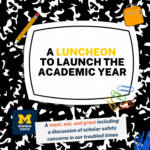
A Luncheon to Launch the Academic Year
August 16, 2026Submit a pitch: “Rest, Repair, and Radical Healing: Responding to Structural Harm in the Workplace”
What do we—as individuals, communities, and members of a nation—choose to remember? And what, or who, is erased from accounts of our shared past?
Hersey’s quote invites us to answer a call: to care for self and community for the sake of collective wellbeing and wholeness and untether our lives from the systems and structures that facilitate societal dis-ease. The question is… are we ready to answer the call?
Many professional workspaces are built on systems of oppression—capitalism, racism, homophobia, sexism, etc.—that drive what Dr. Gail Christopher refers to as the hierarchy of human value. This hierarchy pre-defines productivity by identity category, so that the work of white, heterosexual, cisgender men serves as the archetype against which all other employees are measured. For those whose identities fall toward the bottom of this hierarchy, the necessity to make oneself fit within those systems and norms that define the workplace inevitably produces harm—like post traumatic stress, burnout and other long-term impacts. In these spaces, extractive leaders use productivity as a management tool, ultimately reinforcing and reifying systems of oppression and the harms they cause. The wellness industry offers solutions and strategies to help address the effects of workplace harm, like stress and burnout. These strategies, however, tend to operate at the individual level and in service to productivity, serving the organization, not the individuals within it, and ignoring the systems and structures that produce the initial harms.
This curated series invites writers to consider and wrestle with the questions: How can healing occur within the inescapable systems and institutions that continue to harm? What are rest, repair, and radical healing in a culture that prioritizes productivity? What are the roles of collective healing & wellness in the workplace? How can workspaces be reimagined to rejuvenate rather than extract? How can we reimagine leadership in ways that do not serve systems of oppression?
Spark Magazine seeks to translate academic research and scholarship into engaging, informative essays for a public audience. We welcome submissions from authors from a wide range of backgrounds, geographic locations, and cultural perspectives (Indigenous writers, writers from the Global South, community activists, academics, practitioners) that explore topics related, but not limited to:
- Resisting harmful structures and building collective, healing spaces in the workplace
- Frameworks and strategies for avoiding burnout
- The roles of culture, healing, extraction, rejuvenation, and redress in professional environments
- Mindful, reparative practices that center shared humanity in leadership and management
- Building and maintaining meaning, joy, connection, and pleasure in relation to labor
- Alternatives to the extractive workplace, e.g. envisioning or sharing examples of alternative workplace structures
Authors are invited to submit a pitch by Monday, August 24 and will be notified of selection by Friday, September 4. Please consider the following information as you prepare your pitch:
- Pitches are about the length of an abstract (under 250 words)
- Pitches will be reviewed by considering their relevance, public accessibility, basis in trusted evidence, and clear writing organization and style.
- Authors must have previously produced work (scholarship, creative work, active practice) related to the topic to ground the proposed essay.
- Invited contributors must review the writing guidelines to submit a first draft (1,200-1,800 words) within four weeks of being accepted and will be assigned a reviewer. The editorial team centers a social justice approach to the review and publication process.
Keep in mind that the audience for Spark Magazine is not specific to any discipline or education level. Envision the reader as someone with a broad understanding of research and scholarship, but without specific knowledge of your field.
This Spark series is curated by Dr. Tia Sherèe Gaynor, Associate Professor of Leadership and Management at the University of Minnesota - Twin Cities and an IMTA certified mindfulness instructor. Her work sits at the nexus of identity, policy, and contemplative leadership. Questions related to pitch content, alignment, or submission interest can be sent to Tia, [email protected].
If you have any questions about the pitch submission process, please contact managing editor Emma Soberano at [email protected].