Submit a pitch: “The K-Culture Effect”
August 7, 2025
Love, Algorithms, and Inequality: Rethinking Online Dating
September 9, 2025“Community Resilience to Extreme Weather and Fire”
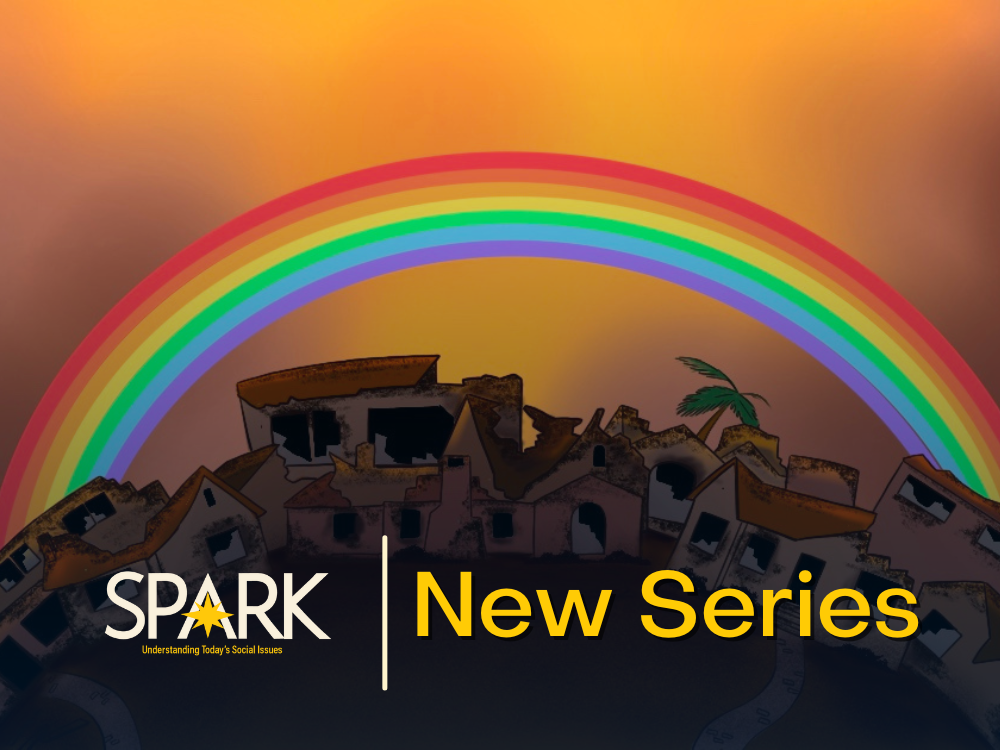
Who knows a community better than the local people who live there?
In an era of increasingly destructive climate change, that question isn’t rhetorical—it’s foundational. Communities around the world are facing rising tides, raging wildfires, extreme heat, and intensifying storms. These are part of a growing global pattern. It's best to start where local knowledge already lives: with the people who experience and navigate these conditions daily.
Local geographic knowledge—rooted in a deep understanding of people, places, and changing environments—is key. From emergency response to long-term adaptation, the people most affected must be empowered to shape the solutions. The “new normal” of extreme weather is here. The way forward is through hearing local stories of climate navigation and resilience.
That’s the foundation of this Spark Magazine series, “Community Resilience and Response to Extreme Weather and Fire.” This collection offers firsthand accounts of community responses to wildfires, hurricanes, floods, heat waves, and storms in the United States. These stories explore key questions:
- What makes a local response to extreme weather effective?
- How does community wisdom lead to tangible climate solutions?
- What lessons can we learn from the lived experiences of people on the front lines?
These are not just stories of survival—they are narratives of leadership, collective strength, innovation and action.
In Los Angeles County, 2025 began with a major environmental wake-up call. Massive wildfires erupted in January, far earlier than California’s typical fire season. Fueled by prolonged drought, record heat, and intense winds—all worsened by climate change—the fires spread rapidly and left widespread destruction. The economic, social, and environmental impacts were severe. Statistics alone don’t capture the full story: families were displaced, nonprofits forced to close, and entire neighborhoods—particularly in working-class areas like Altadena—left vulnerable to exploitation by developers offering lowball property deals. While media coverage focused on disruptions to the film industry, residents were left to ask: Will our communities be rebuilt—and is there still a place for us? Reimagining Corporate Responsibility after the Los Angeles Wildfires tells the story of these competing visions.
In Western North Carolina, Hurricane Helene struck in September 2024, unleashing extreme flooding, mudslides, and tornadoes across the Appalachian region. The storm destroyed homes, severed roadways, and closed campuses. Eleven colleges and universities were affected. A Letter of Gratitude for Faculty and Staff after Hurricane Helene describes how faculty and staff—often without clear institutional support—kept teaching, counseling students, and holding their communities together while dealing with personal loss. One professor remembered how friends helped her evacuate in just a few hours: “It was just people showing up,” she said. While physical spaces have been repaired, the emotional toll has not—but the resilience of local people is undeniable.
In Oklahoma, Latina essential workers continue to shoulder multiple crises. During the COVID-19 pandemic—and in the years that followed—many worked through unsafe conditions to support their families. “I have to work, I have to provide for my kids, I have no choice,” one woman said. How Latina Workers Carry the Burden of the Climate Crisis interviewed 20 Latinx essential workers, revealing how these women are often overexposed to heat, pollution, and economic instability while lacking access to healthcare or paid leave. Their resilience is not abstract—it is an everyday necessity. But it should not be demanded without structural support.
And in Orlando, Florida, youth from a historically Black neighborhood are leading their own response to climate crisis. In partnership with researchers and local leaders, they co-designed a solar-powered mobile Resilience Hub that provides Wi-Fi, refrigeration, charging stations, and shelter during emergencies. More than just a tool, the hub represents a vision for community-based solutions created by those most impacted. Youth Redefine Climate Resistance Through Access-Centered Solutions highlights the ways their work challenges top-down models and demonstrates that youth are not just the future of climate action—they are shaping its present.
One thing is clear: the old models are no longer enough. Systems for emergency management, response, and recovery were not built for this reality. Climate change has ushered in a new era—one that demands a new approach grounded in equity, community trust, and the lived experiences of those closest to the crisis.
This series highlights the sustainability of local people and geographies—not just as ideals, but as the reality of resilience efforts in neighborhoods across the country. Community resilience isn’t just about “bouncing back.”It’s about much more.
If this is our new norm, we must evolve—not only in how we respond to disasters, but in how we listen, collaborate, and act. Community-led insights and place-based storytelling are essential tools for building meaningful, sustainable change.
Before the next disaster strikes, we must ask:Will we trust and invest in the people who know their communities best—or keep repeating the mistakes of exclusion?
Are we truly listening?
Dr. Sheila Lakshmi Steinberg is director of Institute for Sustainability and professor of geography and environmental studies at California State University, Northridge. She is a book author and a believer in the power of local people across geographies.