
Director's Letter
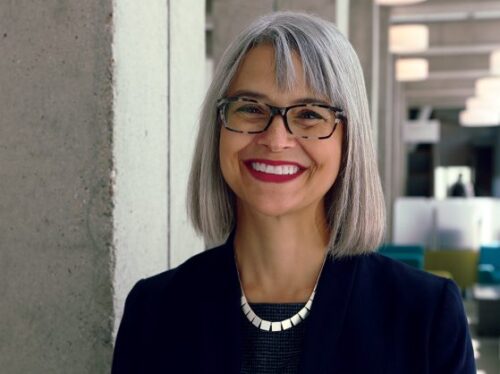
Liz Cole, Director
Dear Friends of NCID,
2025/26 marks the 20th anniversary of the NCID, as well as the NCID's move from the Office of Diversity, Equity, and Inclusion back to the College of Literature, Science, and the Arts (LSA) at the University of Michigan. I write to share news about another milestone for the Center.
We have decided to recognize the next phase of the Center’s work through a renaming in honor of our founding director, U-M alum and Professor Emeritus Phillip J. Bowman, who led the Center between 2006 and 2013. Going forward, the NCID's new name will be The Phillip J. Bowman Center for Scholarship to Practice, to be known colloquially as the Bowman Center.
This name emerged after a process that included extended conversation within the NCID, surveying some of our most engaged community members, and consultation with leadership in our college.
The new name honors our foundations and our purpose. As you can see in the biographical sketch of Professor Bowman linked above, naming the center in his honor represents our continuing mission. It was also felt that the inclusion of the word “scholarship” more precisely identifies our mission than our current name. The change is in step with recent name changes to offices that advance access and justice on our own campus and nationally.
The new name emphasizes our alignment with the values of LSA. “We are a diverse intellectual community, working together to reimagine the world and create positive, purposeful change.” The name does this both through the invocation of Professor Bowman, whose scholarship and leadership sought to understand and address societal disparities, and the foregrounding of the Center’s mission to support research in service to social change and the common good.
The new name puts our vision front and center. We believe that policy and practice grounded in sound research will provide the foundation for bringing about a more just society. We aim to bring that vision into reality through our programs and initiatives including:
- CASCaDE is an online toolkit of evidence-based resources for faculty and staff in higher education who aspire to make change on their campus to improve outcomes for underrepresented minority students.
- The Inclusive History Project is a 5-year presidential initiative that engages members of the university community and our campuses’ neighbors to better understand the full history of the institution and to consider what reparative actions that history demands in the present and for the future.
- Funding for Anti-racism Research advances anti-racism scholarship and combats systemic racism through funding for critical projects and leveraging expertise in policy, practice, teaching, and community partnerships.
- Community Conversations provides gatherings for our community of scholars, practitioners, and students to explore contemporary issues through the lenses of research and practice.
- Spark Magazine is an online publication offering timely and scholarly-informed content for people to gain a general level of understanding on historical and current social issues so that they can make informed decisions that affect them, their families, and communities.
As we reflect on our 20th anniversary, we are reminded that our work continues a long tradition – at UM and beyond – of joining in community to imagine a more just world, and to carry out the difficult labor of bringing that world into being. As Dr. Bowman shared at our 20th anniversary celebration in December:
“Oftentimes, when I’m feeling kind of shaky, I invoke Frederick Douglass: ‘Where there is no struggle, there is no progress’ And it reminds us that we do have power, individually and collectively, and we do have agency. But as Frederick Douglass cautioned us, ‘Power can seize nothing without a demand’. It never has, and it never will. Agitate, agitate, agitate.”
Thank you for being part of this vibrant community of scholars and practitioners in higher education. If you have any questions please contact me at [email protected].
Warmly,
Liz Cole